By Dr Dominik Schaffner
Exosomes are nanoscale extracellular vesicles that carry signalling cargo between cells. No exosome product is currently included on the Australian Register of Therapeutic Goods, and no exosome therapeutic has full market approval from the TGA, the FDA or the EMA. Clinics working within the Australian regulatory position therefore apply exosome preparations topically, immediately after a procedure that creates microchannels in the skin. The clinical evidence is early and promising rather than established.
What exosomes are
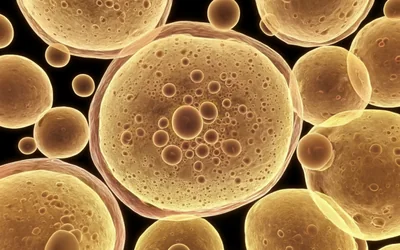
An exosome is a small membrane-bound vesicle, somewhere between 30 and 150 nanometres across, that a cell releases through the endosomal pathway. Its cargo includes proteins, lipids and several classes of RNA. For a long stretch researchers treated these vesicles as little more than cellular debris. A 2024 review in the Anais Brasileiros de Dermatologia sets out where the science has landed. They are active messengers, and they carry the characteristics of whichever cell produced them.
The mechanism is paracrine signalling, meaning local cell-to-cell communication. A cell packages instructions into a vesicle, the vesicle travels a short distance, and a receiving cell reads the contents and adjusts its behaviour. In skin, that pathway is involved in wound healing, collagen remodelling and inflammatory response.
Two points follow from that, and both come back later. The exosomes used in clinics are not harvested from you. They are made by cultured cells in a laboratory, which puts the cell source and the manufacturing process at the centre of any quality question. Size is the second point. At 30 to 150 nanometres these vesicles are far too large to cross intact skin in any useful quantity, so how they are delivered is not a technicality.
Exosomes are not stem cells
This confusion is common, and it produces both the wrong expectation and the wrong regulatory assumption.
Exosomes are made by cells. They are not cells. They cannot divide, engraft or become new tissue. What they can do is signal.
That difference changes the conversation. A cell-based treatment raises questions about viability, engraftment and immune matching. An exosome preparation raises questions about cargo, purity, dose and sterility. Our guide to stem cell therapy for knee osteoarthritis in Australia sets out how that framework differs.
The Australian regulatory position, stated plainly
Start with the fact that governs everything else. There is no approved exosome medicine in Australia.
Writing in Extracellular Vesicles and Circulating Nucleic Acids in 2026, Rudge and colleagues at the University of Sydney set out the Australian position. As of April 2025 there were 49 biological products on the ARTG, and none were extracellular vesicle medicines. No EV-based therapeutic has full market approval from the TGA, the FDA or the European Medicines Agency.
Preparations made from human cells fall under the Regulatory Framework for Biologicals, which grades products from Class 1 to Class 4 according to risk. Rudge and colleagues expect EVs taken from non-pluripotent stem cells to sit in Class 3, and that would mean a full non-clinical and clinical dossier before anything could be registered.
Australia does have routes to goods that have not been approved. The Special Access Scheme is one. The Authorised Prescriber Scheme is another, and certain exclusions and exemptions cover autologous human cell and tissue products. What is easy to miss is that these routes exist to get one patient access to one product, not to supply a market. For biologicals, the Authorised Prescriber route narrows further, to patients whose condition is serious or life-threatening. Cosmetic use is not what any of it was designed for.
Rudge and colleagues also raise two questions nobody has resolved yet. The first is whether pulling EVs out of a culture counts as “minimal manipulation” as the exemption criteria use that term. The second is what “homologous use” should mean when the material is a vesicle. Both remain matters of interpretation rather than settled law.
What is not yet settled. The boundary between a cosmetic preparation and a therapeutic good is drawn by intended purpose, not by the route of application. So a product applied to the skin can still be captured as a therapeutic good if it is presented for a therapeutic use. Anyone claiming total clarity about where every exosome preparation sits in Australian law is overstating the position, and this article does not claim it either.
The international picture is not uniform, which is why a claim made overseas cannot simply be carried across to Australia. In the United States, the FDA treats exosomes intended to treat a condition as drugs and biological products, and it has approved none of them. In December 2019 the agency issued a Public Safety Notification after several patients in Nebraska suffered serious adverse events following treatment with unapproved products sold as containing exosomes. Europe went a different way. The EMA classifies EV therapies as Advanced Therapy Medicinal Products wherever the cargo produces a physiological effect. Taiwan has gone further again, covering EVs directly under its Regenerative Medicine Act and approving human-derived EVs for cosmetic use.
Three questions if a clinic offers exosomes by needle
If you are offered exosomes administered by needle, into a vein, or systemically, you now know enough to ask:
1. Which ARTG entry or which TGA access pathway authorises the product you intend to use on me?
2. If it is an unapproved good, who is prescribing it, and what about my case meets the grounds for that pathway?
3. Can I see the sterility and identity testing documentation for the batch you plan to use on me?
A clinic that can answer these will answer them without much trouble. If the answers do not come, that tells you something as well.
How compliant topical exosome delivery actually works
The delivery route is the whole procedure, not an afterthought to it.
A channelling treatment such as skin needling, radiofrequency microneedling or fractional laser creates transient microchannels through the stratum corneum, the skin’s outer barrier layer. The exosome preparation is applied immediately afterwards, while those channels are still open. Once the barrier reseals over the following hours, the window closes.
That has a practical consequence. The channelling procedure and the exosome application make up one treatment, not two services stacked on top of each other. Device settings count for as much as the contents of the vial, and the clinician running the device counts for more than either.
The underlying physics is not controversial. The stratum corneum exists to keep foreign material out, and it is effective against particles far smaller than an exosome. This is the same bioavailability logic that governs delivery decisions elsewhere in regenerative medicine, which we cover in our comparison of NAD⁺ delivery routes.
Exosome serum at home versus exosome application in clinic
Search for exosome serum or exosome pore serum and you will find retail products for home use. These are not the same intervention as an in-clinic application, and the difference is not marketing spin.
A serum you use at home goes onto intact skin, and the barrier is precisely the problem. Plenty of retail products also use plant-derived exosome-like nanovesicles instead of human cell-derived preparations. Research on plant-derived vesicles has shown some ability to penetrate skin models, along with some favourable effects on barrier and inflammatory markers in cultured cells. All of that work sits in the laboratory and in animal models. None of it is human trial evidence.
A retail serum may still be a perfectly good cosmetic. Judge it as one.
Exosomes for skin: what the evidence supports
The preclinical work is genuinely interesting. In laboratory and animal models, mesenchymal stem cell-derived exosomes have been reported to modulate inflammation, promote angiogenesis, influence matrix remodelling and affect pigmentation pathways, with faster wound closure and improved scar architecture. Every finding in that sentence comes from a model, not a patient.
Commercial adoption has run well ahead of the human evidence. Dhaliwal and colleagues published a systematic review in the Journal of Cosmetic Dermatology that screened the literature up to June 2025. Eight studies met their quality criteria, covering 171 patients in total across androgenetic alopecia, skin ageing, melasma, pigmentation, enlarged pores, acne and atrophic scarring. Most of those were split-face trials or case series. The authors called the evidence of benefit early, and asked for studies that are bigger and run longer.
The best-supported practical use is the least dramatic one: supporting recovery after a channelling procedure. That is the claim the current evidence can carry.
Exosomes for hair: what the evidence supports
The hair literature illustrates the gap between interest and evidence better than any other application.
A 2023 systematic review in the Journal of Cosmetic Dermatology by Gupta and colleagues searched for clinical evidence on exosomes in hair restoration and found 16 studies, of which 15 were preclinical and one clinical. That single clinical study reported significant increases in hair density and thickness in 39 patients with androgenetic alopecia using a topical adipose-derived stem cell exosome preparation, with no significant adverse reactions reported.
More work has appeared since then. A 2025 systematic review in Clinical, Cosmetic and Investigational Dermatology looked across alopecia types and exosome sources, and landed somewhere familiar. The signals are encouraging. What holds them back is small sample sizes, sourcing and dosing that shift from study to study, delivery that varies, and no regulated product to anchor any of it. Where gains in hair count and density are reported, they usually come from small open-label or split-scalp series that paired exosomes with microneedling, mostly in early androgenetic alopecia.
PRP belongs alongside that as a comparison. Anitua and colleagues published a 2025 systematic review and meta-analysis in Dermatology and Therapy that pooled 43 randomised controlled trials and 1,877 participants. Activated PRP increased hair density and reduced recurrence against placebo, and improved clinical outcomes and satisfaction. The same analysis found no significant effect on hair thickness, and found that non-activated PRP was associated with more frequent adverse effects.
One more thing. Exosome preparations do not replace established medical therapy in advanced androgenetic alopecia. If you have significant pattern hair loss, start with a doctor and with treatments that have been through proper trials.
Exosomes versus PRP
Both are described as regenerative and both aim to change local signalling, but they are different interventions with different governance. The difference between exosomes and PRP begins with where the material comes from.
| Exosome preparation | PRP | |
|---|---|---|
| Source | Laboratory-prepared from cultured cells, external to you | Your own blood, drawn at the visit |
| Consistency between sessions | Standardised by the manufacturer, if properly characterised | Varies with your physiology on the day |
| Australian regulatory status | No exosome product on the ARTG | Autologous human cell and tissue product; exempt in defined circumstances |
| Delivery in compliant Australian practice | Topical, after a channelling procedure | Injected by a registered medical practitioner |
| Evidence base | Small, mostly open-label, heterogeneous | Larger; 43 randomised trials pooled for alopecia |
| Session structure | Device procedure plus immediate application | Blood draw, centrifugation, then treatment |
Neither is a substitute for the other, and neither has been shown to regrow tissue you have lost. More on how we approach both is on our Regenerative Medicine page.
Sourcing, sterility and the questions worth asking
Are exosomes safe? Safety turns on the specific preparation in front of you far more than on exosomes as a concept. The concept is not what has hurt anyone.
What has been pooled from trials reads reasonably well. There is a 2024 meta-analysis by Van Delen and colleagues in the Journal of Extracellular Vesicles, built on 21 studies and 335 patients, in which 0.7% had a serious adverse event. Manufacturing and reporting varied a lot from one study to the next, so that figure deserves to be read with care. Where people have actually been harmed is outside any controlled setting. The FDA’s 2019 notification came after serious adverse events, severe infections among them, in patients given unapproved products. Enforcement action since then has cited failures to validate sterility procedures.
Which is why the questions below are not pedantic. They are the difference between a characterised biological preparation and an unlabelled vial.
1. What is the cell source, and can the supplier document its provenance and donor screening?
2. What isolation and purification method was used, and does the characterisation follow the MISEV guidelines?
3. What sterility and endotoxin testing was performed on this batch, and can you see the certificate?
4. What testing confirms identity and potency, and can you show me the result?
5. Which batch is going on me, and is that number written into my notes?
6. How was it stored and shipped, and is there stability data behind those conditions?
7. Who will be treating me, and are they registered to do it?
The reporting problem is documented. As Rudge and colleagues note, only 12.1% of EV clinical trials report their isolation methodology and just 36.1% specify characterisation methods. If the published research struggles with this, a supplier’s brochure deserves scrutiny.
Who is not a candidate
Please do not rule yourself in or out from a web page. That call sits with the clinician who assesses you. Some situations mean we wait, and some mean we say no. Active skin infection at the treatment site is one. So is significant inflammation there. Certain autoimmune conditions and immunosuppressed states apply as well, as do pregnancy and breastfeeding. With active malignancy, we would want your treating specialist in the conversation before anything else happens. The channelling procedure brings its own set of questions. Do you scar in a keloid or hypertrophic way? Have you been on isotretinoin recently? Are you taking anything photosensitising, if a laser is part of the plan?
There is one more criterion and it is not medical: realistic expectation. If you are hoping for a result the current evidence cannot support, the right outcome of a consultation is a conversation rather than a booking.
Why Choose Biogenix for Exosome Therapy in Sydney
At Biogenix, exosome preparations are applied topically, immediately after a channelling procedure, by a registered practitioner. We do not offer exosomes by any other route. Having read the section above, you know why that is the position rather than a preference.
Prof. Dr Philip Schoettle, our International Associate Partner, is an internationally recognised authority in regenerative medicine and cellular longevity. Based in Munich, Zurich and Dubai, he has more than a decade pioneering stem cell and orthobiologic therapies for cartilage repair, tendon regeneration and joint preservation. His involvement is the reason our protocols are benchmarked against European clinical practice rather than assembled from supplier marketing material.
Dr Dominik Schaffner, our Founder and CEO, is a German-Australian medical practitioner, fully accredited in Australia, Germany and the EU, and a German board-certified Specialist Orthopaedic and Musculoskeletal Trauma Surgeon. His remit spans regenerative medicine, longevity medicine and biologics, including PRP, stem cells, exosomes, peptides, cartilage regeneration and tissue engineering. Credentials for every clinician are published on our Our Doctors page.
On the governance questions set out earlier, our own commitments are the answers we would want if we were the patient. The cell source is defined and documented. Sterility and identity testing is held on file. Batch traceability is recorded against your treatment. Delivery devices are clinical grade and are operated by trained clinicians. Ask us for any of it at your consultation.
Our clinic is in Bankstown, a short walk from Bankstown station, and patients travel to us from across South West Sydney, the Inner West and the Sydney CBD. Ask about telehealth for your initial consultation if getting in is difficult.
Biogenix, Suite 105, 17 Meredith St, Bankstown NSW 2200. Phone +61 2 9128 3480. Email info@biogenix.com.au.
You can also find us on Instagram, Facebook and LinkedIn.
To discuss whether a regenerative aesthetic protocol is appropriate for you, book a consultation.
Frequently asked questions
What is exosome therapy?
Exosome therapy is the application of nanoscale extracellular vesicles, roughly 30 to 150 nanometres across, that carry signalling cargo such as proteins, lipids and RNA between cells. In aesthetic practice the preparation is laboratory-made from cultured cells and applied to the skin immediately after a channelling procedure such as microneedling, with the intention of influencing local cell signalling involved in repair.
Are exosomes approved in Australia?
No exosome product currently appears on the Australian Register of Therapeutic Goods. Rudge and colleagues, writing in 2026, noted that as of April 2025 none of the 49 biological products listed on the ARTG were extracellular vesicle medicines, and that no EV therapeutic held full market approval from the TGA, FDA or EMA. Pathways to unapproved goods do exist, but they work one patient at a time.
Are exosomes better than PRP?
Not on the evidence we have. Far more has been published on PRP. To take one example, a 2025 meta-analysis in Dermatology and Therapy pooled 43 randomised trials and 1,877 participants for alopecia. Nothing on the exosome side comes close to that. Those studies stay small and mostly open-label, and they do not agree with each other on sourcing or dosing. Exosome preparations are more consistent from session to session than PRP can be, which is worth something. Consistency and proof are not the same thing though.
Do exosomes work for hair loss?
Too early to say. The research is thin. In 2023 a systematic review could only find 16 studies on exosomes in hair restoration, and 15 of those were preclinical. A 2025 review across alopecia types ran into the same wall. What gets reported as a density gain usually comes from a small series where exosomes were used alongside microneedling, in early pattern hair loss. If your hair loss is advanced, this does not take the place of established medical therapy.
Do exosome treatments work for skin?
The laboratory case is stronger than the clinical one. Models show effects on inflammation, angiogenesis, matrix remodelling and pigmentation. In people there is less to go on. A systematic review screening the literature to June 2025 came up with eight quality-screened studies covering 171 patients, mostly split-face trials and case series. The use with the best support behind it is helping skin recover after a channelling procedure.
Are exosome injections safe?
This is not something we offer, and the question deserves a direct answer rather than reassurance. There is no approved exosome product in Australia to administer by that route, and the documented safety problems internationally have involved unapproved preparations. The FDA issued a Public Safety Notification in December 2019 after serious adverse events, including severe infections, in patients treated with unapproved products marketed as containing exosomes. Sterility, identity and provenance are where the risk sits.
Further reading
- Aesthetics and Beauty Medicine at Biogenix
- Regenerative Medicine at Biogenix
- Stem Cell Therapy for Knee Osteoarthritis in Australia: the regulations and the evidence
- Our Doctors
Medical references
1. Rudge C, McClelland R, Chrzanowski W, Davis RL. The regulatory landscape for extracellular vesicle therapies: Australian context and future directions. Extracellular Vesicles and Circulating Nucleic Acids, 2026. https://www.oaepublish.com/articles/evcna.2025.129
2. Therapeutic Goods Administration. About the Australian Register of Therapeutic Goods (ARTG). https://www.tga.gov.au/products/regulations-all-products/about-australian-register-therapeutic-goods-artg
3. Therapeutic Goods Administration. Understanding the minimal manipulation method of preparation for biologicals. https://www.tga.gov.au/resources/guidance/understanding-minimal-manipulation-method-preparation-biologicals
4. Therapeutic Goods Administration. Determining if a biological product is for homologous use. https://www.tga.gov.au/resources/guidance/determining-if-biological-product-homologous-use
5. Therapeutic Goods Administration. Dossier requirements for Class 2, 3 and 4 biologicals. https://www.tga.gov.au/resources/guidance/dossier-requirements-class-2-3-and-4-biologicals
6. Medical Board of Australia (Ahpra). Guidelines for advertising a regulated health service. https://www.medicalboard.gov.au/Codes-Guidelines-Policies/Advertising-a-regulated-health-service/Guidelines-for-advertising-regulated-health-services
7. US Food and Drug Administration. Public Safety Notification on Exosome Products, 6 December 2019. https://www.fda.gov/vaccines-blood-biologics/safety-availability-biologics/public-safety-notification-exosome-products
8. US Food and Drug Administration. Public Safety Alert Due to Marketing of Unapproved Stem Cell and Exosome Products. https://www.fda.gov/safety/medical-product-safety-information/public-safety-alert-due-marketing-unapproved-stem-cell-and-exosome-products
9. Exploring the reality of exosomes in dermatology. Anais Brasileiros de Dermatologia, 2024. https://pmc.ncbi.nlm.nih.gov/articles/PMC11745280/
10. Gupta AK, et al. Systematic review of exosome treatment in hair restoration: preliminary evidence, safety, and future directions. Journal of Cosmetic Dermatology, 2023. https://pubmed.ncbi.nlm.nih.gov/37381168/
11. Exosomes and Hair Regeneration: A Systematic Review of Clinical Evidence Across Alopecia Types and Exosome Sources. Clinical, Cosmetic and Investigational Dermatology, 2025. https://www.tandfonline.com/doi/full/10.2147/CCID.S543451
12. Anitua E, Tierno R, Alkhraisat MH. Platelet-rich plasma in the management of alopecia: a systematic review and meta-analysis of clinical evidence. Dermatology and Therapy, 2025. https://link.springer.com/article/10.1007/s13555-025-01542-8
13. Van Delen M, et al. A systematic review and meta-analysis of clinical trials assessing safety and efficacy of human extracellular vesicle-based therapy. Journal of Extracellular Vesicles, 2024. https://www.ncbi.nlm.nih.gov/pmc/articles/PMC11220457
14. Welsh JA, et al; MISEV Consortium. Minimal information for studies of extracellular vesicles (MISEV2023). Journal of Extracellular Vesicles, 2024. https://www.ncbi.nlm.nih.gov/pmc/articles/PMC10850029
15. Verma N, Arora S. Navigating the global regulatory landscape for exosome-based therapeutics. Pharmaceutics, 2025. https://www.mdpi.com/1999-4923/17/8/990
What you have just read is general education. It covers a class of preparation and the Australian regulatory framework that sits around it, and nothing in it is medical advice. We are not recommending a product, and we make no claim that exosome preparations treat, prevent or resolve any condition. Wherever the evidence comes from a laboratory or an animal model, we have said so in the text. Only a registered practitioner can tell you whether a procedure is suitable for you, and only after assessing you individually. Results differ from one person to the next.